Episode Transcript
[00:00:02] Speaker A: Welcome to the Karma Chaj podcast.
[00:00:07] Speaker B: Put your hand on your hearts.
Thank you, Lord, for your presence with us. Thank you, Lord, that where two or three are gathered, you always come. You're always with us.
Lord, I thank you for that sweet thing you always do, Lord, when we worship you, that you are here, that you are blessing us, that you are awakening your people.
But Lord, we pray for ourselves that we would receive even more of you.
Lord, we ask for a fresh anointing.
God, I thank you that for whatever we've come for, Lord, you always give us more.
Lord, I pray for the weary, especially the weary who are here tonight. And I ask, Lord, that you would lift them up, that you would strengthen them.
Lord, I pray that you would pour out your love tonight in greater measure.
Lord, I ask that you would anoint my words.
But Lord, I pray especially that people would encounter you. And if that means, Lord, they're not really even listening, Lord, let them encounter you.
Holy Spirit, fill our lives with your fresh fire.
Awaken your people.
Drench us, God, in your love, your holy love.
Lord, let this be the generation that is the revival generation.
Come, Lord Jesus, come.
Come upon each and every one.
Thank you for what you've already done.
And thank you, Lord, that there is always more of you.
And Jesus, we say we're hungry and we love you.
And the people said, amen.
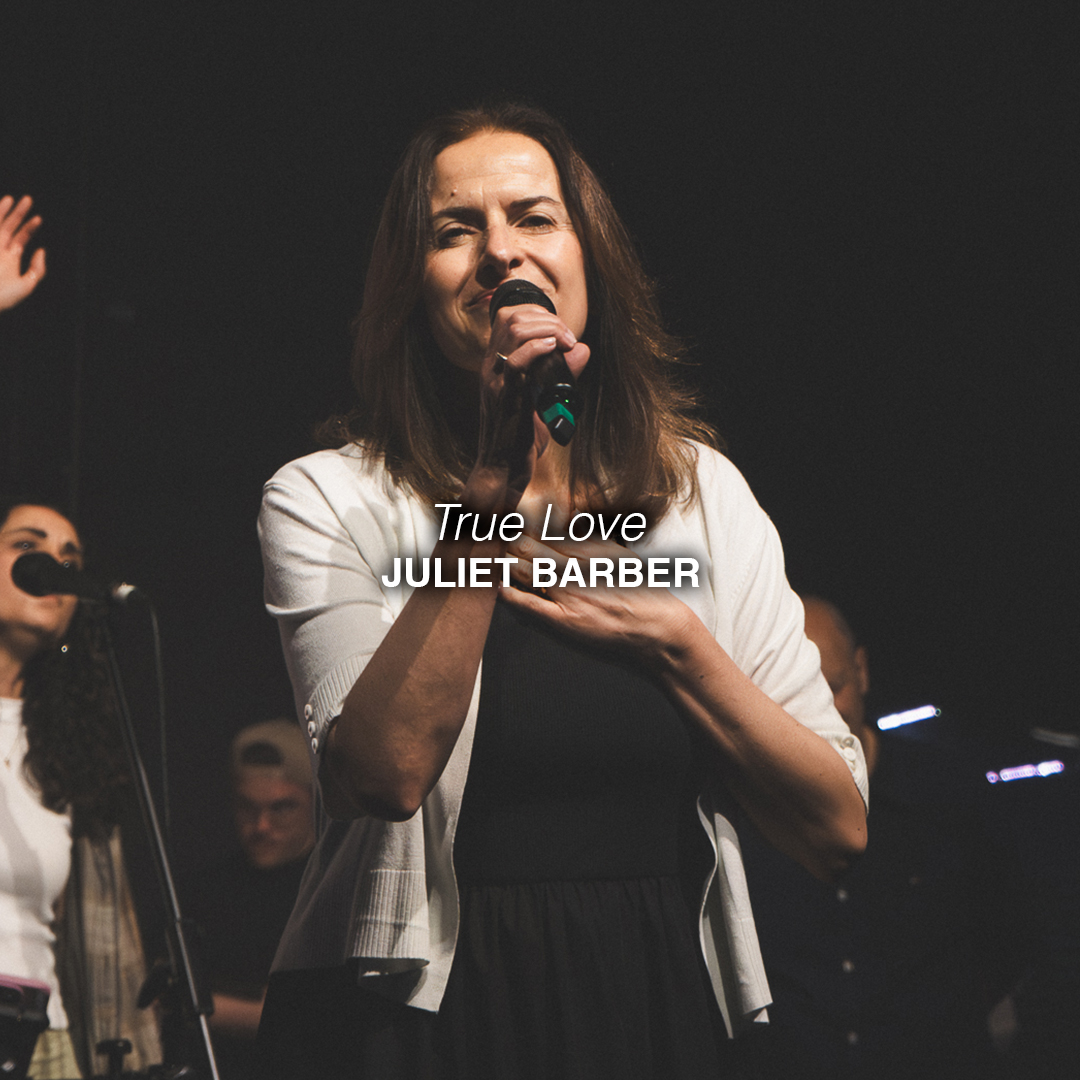
I wonder if there's anyone here among you who loves a good old feel good, sweet movie. Anyone here? You know, how about a mushy, mushy movie?
The boys are like, trick question. Is it okay? Can I put my hand up? What's she going to talk about? You know, I want to tell you a secret. In our house, the person who loves the the mushiest film the most is actually Pastor Steve Barber.
He does. He loves mushy. He loves mushy films. Yeah, you do. Yeah, you do. Don't deny it. I'm gonna out you right here and now.
He loves a mushy film. You know, when the kids were growing up, it was always the challenge of how do we find that film that everybody will love? You know, as our kids were just getting older, boy, girl, four years between them. The film with no nasties in. How do we find that film? The film that's just sweet and good and lovely and it was a bit of a mission, but Steve was really good at it and he had some that he especially loved. The one that he especially loved was Parent Trap. Does anyone remember that one? Yeah. See? Good old fashioned mushy film. You know, and if you don't know, I mean the new version is actually really old now, but the new version, the sweet spot of the twins who were separated at birth because their parents split up. And then they meet by happen chance on an American camp and they realize that they look exactly the same and they are in fact twins. And they have these pictures that are like joined of mum and dad. Long story short, they make this scheme to bring mom and dad back together and of course the story wins out and in the end they all get back together and it's love, love, love people. Beautiful, lovely film films like that, you know, it's quite hard to find them these days. I find, in fact it's been a long time since I've watched a new film because I'm always going back to the old films that have that mushy feel. Good always nice story, always.
Everybody lives happily ever after. Those are the best films, right? And Steve Barber really loves them. You know, when our kids grew up and they. Even when they left home, getting worried, even when they left home on a Saturday night, you could still sometimes find Steve in the movie room watching Parent Trap, laughing at the same old jokes, loving it over and over again, you know, and you're probably wondering like, is Steve really in touch with his feminine side? Sorry, I'm gonna get really, really in trouble now. Totally in trouble.
Like, you know, I need to be honest with you. Steve is like not actually a mushy guy. He's. He's not Mr.
In Touch with his emotions, are you? No, he's not Mr. Newman. He's not the guy who really knows how to cook at all. And he's not very good at ironing. And like he walks the dog.
He's not a new man. He's not. I mean he barely wanted to come to the birth of our children. Like he's just not good at all that stuff. But he loves these old fashioned films. You see, he's not a new man, but he is an old fashioned guy.
And you know, these stories tell the story of an old fashioned kind of love.
And you know, the Bible much the same describes an ancient, beautiful love that is timeless. That's like a boomerang that always comes back with a happy ending. It does, because the love of God is always redemptive. And so there's something, I think in these stories that for us as Christians, when we want to find that nice film, that story about steadfast, faithful, loyal, enduring love that we just love. And he really, really loves them because he's an old fashioned guy who loves steadfast, faithful, loyal love.
You know, in the Bible it speaks of this love in two different ways. You know, love in the Scriptures is described in lots of different ways. There's lots of different kind of loves. But this loyal, steadfast, faithful, enduring love in the New Testament we read about it as agape love.
Many of us will know that agape love is a love that can only be described in the New Testament because it is a picture of how Christ has loved us.
And then it's expressed through love over and over again. And there's that beautiful passage, 1 Corinthians 13, that talks about this love that is enduring, that is patient, that is kind, that is just poured out in this loyal, steadfast, faithful way. But the picture of this love, most importantly, can only be described through the love of Jesus Christ that went to the cross for us. A sacrificial sin, self giving love.
And in the Old Testament, this same love, which is so drenched in the complex, beautiful, wonderful nature and character of God and the way he loves is called hesed.
Hesed in the Old Testament is this faithful, loyal, enduring love.
The best way to describe it is actually loyal love. But words can't explain the way God loves.
They just can't do it. Loyal love, steadfast love, faithful love, kind love, a love that never gives up, a love that is redemptive, that always wins. And it's explained in the law many, many times as the character and nature of God. This hesed loyal, beautiful love. First, when, when the Lord passes by Moses, when the giving of the law is happening and he's explaining this covenant that the people of God are coming into, he explains himself and this love. He says, it says this, Exodus 34, 6. The Lord passed before him and proclaimed the Lord the Lord a God, merciful and gracious, slow to anger, and abounding in steadfast love and faithfulness. The word love there is hesed, this special, loyal, beautiful love that is all about the character of God that is poured out in all of these different words.
Merciful, gracious, slow to anger, faithful, loyal, devoted.
And the Lord calls us as his people to express and pour out this very same love.
It's a love that comes into us by the coming, the indwelling of the Holy Spirit. It's a love that should be in us through and through, poured out of our lives. And this is the love that I want to talk about tonight.
If you've been here for the last few weeks, you'll know that We've been talking about some Bible characters, and last week we talked about Deborah.
And this week I want to talk about Ruth.
The story of Ruth is a story of hesed love.
It's a picture of God's love for us and this beautiful love narrative flowing through, explaining the way you and I can love in the same way. And that's what I want to talk about tonight. But it's a story that's set in the same time as the story that we were talking about last week, the story of Deborah, set in the time of Judges, a time where.
A difficult time for God's people, where last week Amelia was saying that it's a time where God's people were really pretty much doing whatever the heck they wanted and there was a lot of evil in the eyes of the Lord. And then we see Deborah, this wonderful judge, rise. And we talked about that story last week. Well, Ruth is another story set in this time where people were doing whatever the heck they wanted. And it's this. This little old narrative that teaches us about God's love for us and the way that we can love set in this part of God's history that's called Judges. And it's a story of a woman called Naomi. Many of you will have read it, some of you may not have, but it's the story of a woman called Naomi who goes with her husband. Her husband takes her over to Moab during a time of famine. And she's traveling from Bethlehem. Bethlehem is their hometown. And they go to Moab during a time of famine. And Elimelech dies.
But her two sons, Marlon and Chilean, marry Moabite women, but then they die too. And so they're destitute as a family. And it's really interesting because do you remember this? This season of Time is a story where God's people were doing whatever they wanted, really. Not all of them, but many. And they. They'd sort of moved far away from the law and the covenant love of God and knowing what it. What it was to do what he said. And it's interesting that this family, during a time of famine in Bethlehem, up and leave and go to Moab. And of course, you know, God's people were not meant to move away from the promised land. They move away from the promised land.
And God's people were not meant to marry foreign women, but they marry foreign women.
And then the story goes that they all die and they end up destitute. Now, listen, it doesn't say in the story that's a consequence of Them sort of walking away from the promised land. But this was a time where God's people suffered because they weren't honoring the laws of God. But here's the thing.
The actual thing that brings about the redemption is actually one of the things that they did wrong.
They married foreign women. But it is Ruth in the story who is that foreign woman who demonstrates God's redeeming love. This is how far his love goes.
That even when we get it wrong, even when we mess up, and even when there's a consequence to that, this family were destitute. The very thing that was in the middle of it, you know, this going to a foreign land, this marrying foreign women, becomes the very thing that God uses to redeem the situation. And that is a picture of God's love in and of itself. If you are here tonight and you are in a hole, you're in a desperate situation, and maybe it's even your own fault, you know, there is nothing that God can't redeem. Nothing the love of God cannot redeem in our lives. And this is a picture of that very thing.
It's so beautiful, this story. We are actually going to get to read some of the story.
Turn with your Bibles to Ruth 1.
You know, I want to read quite a lot of scripture to you tonight. We're going to sort of dip in and out of it.
You know, if.
If I don't remember where we are. Bible verse to Bible verse. It's fine, just listen to it. I'm going to read it on my notes. I'm going to read it in the Bible. But to start with, what I'd love you to do is just to stand.
To stand in the presence of God's word. As we read the beginning of this story, this beautiful story about the love of God, says this.
This is just as they were gonna go to Bethlehem. Says this from verse 6, Ruth 1. Then she arose with her daughters in in law to return from the country of Moab. For she had heard in the fields of Moab that the Lord had visited his people and given them food. You see, in the end, God did come through.
They perhaps never should have left the place of promise.
So she decided, they decided that they were going to return. So she set out from the place where she was with her two daughters in law. And they went on the way to return to the land of Judah. But Naomi said to her two daughters in law, go return each of you to her mother's house. May the Lord deal kindly with you. The word that speaks of Hesed over and over again in this book is kindly. Kindly is the word that describes the hesed love of God in the story. And Naomi is asking for hesed for her daughters in law.
Now this is really interesting because in this story, the story is all about the way in which Ruth loves.
And we see sort of other elements to it, but it's really about the way God's love is expressed through the love of Ruth. But here, right at the beginning of the story, Naomi is actually telling her daughters to go because she wants the love of God's kindness to be in their lives. And that was an unselfish act. So in that moment, she expressed chesed to her daughter in law because it wouldn't have necessarily been a safe or great thing for her to make this big journey on her own all the way back to Bethlehem. But right here she expresses hesed love in this unselfish desire for her daughters to go back. And remember I said that this love, when we give it, is like a boomerang. Did I say that?
It's like a boomerang. It comes back to us. It comes back to us.
So she says, may the Lord deal kindly with you as you have dealt, as you have dealt with the dead and with me, the Lord grant that you might find rest, each of you in the house of your husband. Then she kissed them and they lifted up their voices and they wept. And they said to her, no, we will return with you to your people. But Naomi said, turn back, my daughters. Why will you go with me? Have I yet sons in my womb that they may become your husbands?
Now this story is all about the kinsman Redeemer. It's the picture of the redemption of God, the kinsman Redeemer, that we're going to understand a bit more as we go on in the story. And if you've read your Bibles at all, you know that this is the big part of the story.
But here, right at this moment, we see a little picture of that where she's saying, have I yet sons? Have I yet children that can grow up and become your redemption? Because of course, in the law, when this situation happened, when somebody was widowed, they could look to another son to marry the widowed woman.
And the lineage of the children would be continued, the inheritance would be continued. But she's saying, I haven't got anything. There's nothing. There's nothing. I haven't got anything. There's no hope. There's no hope here of redemption.
But of course there will be because of God's Love.
Turn back, my daughters. Go your way. For I am too old to have a husband. If I should say I have hope. Even if I should have a husband this night and should bear sons, would you therefore wait till they were grown? Would you therefore refrain from marrying? No, my daughters. For it is exceedingly bitter to me for your sake that the hand of the Lord has gone out against me. Then they lifted up their voices and they wept. And Orpah kissed her mother in law. But Ruth clung to her.
And she said, see, your sister in law has gone back to her people and to her Gods. Return after your sister in law. But Ruth said, do not urge me to leave you or to return from following you. Where you go, I will go. And where you lodge, I will lodge. Your people shall be my people and your God, my God. And where you die, I will die. And there I will be buried. And may the Lord do to me. And more also. If anything but death parts me from you. And when Naomi saw that she was determined to go with her, she said, no more.
Will you take a seat?
It's really a tragic and sad story that speaks of loyal, faithful love. Because it is set in the midst of such a tragic and sad story. That's where love wins.
That's where love never gives up.
That's where love can save the day in the midst of a tragedy, in the midst of a very, very sad situation.
And the main character of the book, as I've said, is Ruth. But in that moment, as I said, Naomi displays this hesed love. And it is this love that will come back to her.
And the first thing I want to say to you about this story is that hesed love, which is true love, hesed in the Old Testament, agape in the New Testament, is a love that never gives up.
You know, there's that song, isn't there? When the going get tough, the tough get going. Well, this is.
It's similar, but different. When the going get. When the going gets tough, the tough stay.
When the going gets tough, the tough stay. Those who love will stay. Hesed love is about never giving up on love, you know. In this story, Ruth displays hesed love not only for Naomi, but for God.
She says, I won't leave. I can't leave. And in that moment, it's a completely unselfish action in a desperate situation. It would have been so easy for her. Her to go back to her family. It would have been so easy for her to find a husband in her hometown. But in that moment, she is loyal in love. Because Naomi, I mean, maybe she could have made the journey on her own, but there was a famine, she could have starved.
All sorts of things could have happened to Naomi. And in that moment, she doesn't think of herself, she thinks of Naomi. But we don't know where it was that she became someone who loved Yahweh. We don't know whether she already loved Yahweh or in that moment when she expressed her love for Naomi, she also expressed her love for Yahweh. And she will not leave because of love.
Hesed love is a love that never gives up. And a love that never gives up is something that should always be seen in God's people. But actually it often isn't seen in the world that we live in. In the world that we live in, when the going gets tough, often everybody gets going.
But in the community of God, when there are difficult situations, when hard times hit, when there's tragedy and sorrow and suffering, God's people stay in covenant love.
And here's the thing, you know, when we think of covenant, often we think of kind of covenant relationships like marriage, the things that we're bound to by law or the things that we have to be in. And so we have to stay. But this situation, Ruth did not have to stay. She was not bound to it by any legal thing. Not marriage, not anything. She stays because she loves Naomi and because she loves Yahweh.
This is a story about the situations we face where we're in covenant relationships, where we're in a connected covenant relationship in some way. And we stay because we love when the going gets tough.
You know, this can mean all sorts of different things in all sorts of different situations.
Loyal, faithful, steadfast love that doesn't give up, expressed in the covenant of God to his people. It's a love about covenant, which is a love about promise.
That sometimes is covenant. Sometimes it's about, yes, I'm married and I'm going to stay because I've made a covenant with someone. Sometimes it's a covenant because it's family. And we don't get to choose our family. So we stay because we love them, because we don't get to choose our family. But sometimes it's covenant because actually we've promised or developed a connection with someone, or there's a calling on our life that God has called us to that we're not going to give up on, because there's covenant, because there's promise, because we're connected, because we're going to stay, because we love that person because we love God and we don't give up when the going gets tough.
That's what hesed love is. It's when the hard times hit, we see how we love and it's so many different things. It could be the boss that, you know, really annoys us, but God's called us to be in that place and stay. And so we love.
It can be the family member who's going up the wall and we're actually. We can't choose our family and so we love.
It could be the friendship where the friend is going through a hard time and, you know, it feels like it's all one way for a season because they're going through a hard time. But we've made a promise, there's a connection, a commit.
It can be a church family, it can be a church situation. It's a place where God has said, I've called you to love and I will not give up when the going gets tough. You know, when Steve and I started dating, another little secret. Well, quite a few of you know this actually. Before I became a Christian in my pre Christian days, I went out with quite a few losers.
Has to be said, I went out with quite a few loser guys who are like, just what the heck was I doing? They were just not good guys, you know, my mum would say, not really the marrying kind, Juliet. But anyway, I just did. And then when I became a Christian, one of the things that the Lord did with me, straight away, it's almost like, you know, like dad talk. He pretty much straight away kind of said to me, I want to show you what a good man is.
I want to show you what it looks like to be with someone who's good according to what I see. And I didn't know what that was. I did just lots of broken stuff in my life. I didn't understand what that was.
And anyway, I won't tell you the whole love story of Steve and I getting together and starting dating, but when we started to date, just early days dating, one of the things that I really fell in love with quite quickly was the way that I could have a super emotional day. Now listen, I'm an emotional sort of person.
Not everyone's really emotional, but I'm really emotional and I had a pretty broken past with men and my father and all of that. And so sometimes I just have an emotional wobble, emotionally wobbly day. And Steve was like steely, immovable. Just didn't phase him, just didn't. He was just like steadfast Faithful, loyal, loved me through those days. And I really fell in love with that. I really did. You know, so sometimes it's about actually how we choose our relationships. Are we choosing someone who has that in their lives, who does that towards us? Not just in boyfriend, girlfriend relationships, but friendships and other relationships. Someone who has this hesed love, but also it's just in the everyday sort of stuff of life that we're in, how do we love? How do we express this loyal love?
It's a love that never gives up. It doesn't give up when the going gets tough. You know, in this church we've been through in the last few years, turbulent journey with this building. We were talking about it this morning and we're really excited. If you were there this morning, you'll know that there is actually a building on the horizon. Hurrah. If you didn't know that, you'll have to watch back this morning because we've been talking about it for years. But it's been a different, difficult journey. It's been a difficult journey. I mean, we came here in 2007. I can't remember when we got this building. It was about 10 years ago, you know, church planting and not having our own venue and all of that kind of pioneering stuff you do in the mission of God. And sometimes that's been great and sometimes it's been really, really hard.
And in the last three years, this stuff with the building, it's just been really quite horrible.
But you know what?
There have been moments where Steve and I have looked at each other just for a moment, just for a flicker and said, we feel like we're called to Hawaii.
Just a moment where we're like, Hawaii is calling us.
And then we look at all of you and we remember that God called us here. I mean, it's just a moment, a moment where we say we could just give up when the going gets tough. But the thing that keeps us going is covenant Love.
We love you with all our hearts. We love this church. We love this city. We love God. And he said, and old orders are good orders till we get new orders. And so we love. We don't give up. And you know what? This is about so many different situations in our lives where we have something that's countercultural, where we don't just do whatever the heck we want, we stay because we love. Hesed is a love that never gives up. And Ruth stayed with Naomi even though it could have cost her her life. Why? Because she loved.
Because she loved with the love of God and because she loved God.
And this is a love that is to pour out of us as God's people. A love that never gives up. Second, it's a love that is self giving.
It's a love that is self giving, marked by giving, not getting.
You know, in 1 Corinthians 13, in the message translation of that passage that talks about love is patient, love is kind. It doesn't give up. It's. I always get all the translations mixed up because we've read them so much, but it actually says that it's not about self, it's not about getting, it's about giving.
It's not about getting, it's about giving. And this is hugely counter to the culture that we're in. It's hugely countercultural for us because we're surrounded by a world that's all about, what do I get out of everything.
But the love of God is about what do I give, what do I pour out? It's self giving. It's self giving.
And this is the love that Naomi demonstrates to Ruth.
You know, the story goes. And you know, it's always hard when you do a Bible character because they're whole books of the Bible and you can't read it all.
But just to tell you the next part of the story, chapter two, the story goes that they arrive in Bethlehem.
They've taken this long journey, and Naomi stands in the middle of the town saying, call me Mara. Just call me Mara. You know, all the people are coming and hearing her story, and she's like, just call me Mara, Mar. Mar. Mar. Just call me Mara. And I'm not surprised. She's lost everything. Mara means bitter. She's saying, call me bitter, just call me bitter. She's absolutely wallowing in her pain. And who wouldn't? Who wouldn't in that situation? But that's not what Ruth does.
Ruth gets up, she gets off her backside. She could have stayed in bed all day. I would if I got to Bethlehem and I'd lost my husband and I was starving and there was a famine. You know, all these hard things are happening in her life, but she gets up off her backside and she says, would you like me to go to the field where our family could possibly be, where our family, our kinsmen could possibly be? Shall I go to the field and glean Naomi? And Naomi says, yes.
She could have stayed in her pain, she could have wallowed in her tragedy.
But she gets up and she goes to the field and she gleans, looking for redemption, looking for a Redeemer. Now remember that this is a time where the people did whatever they wanted. And even though some of these things were stated in the law, that they could find redemption by going back to Bethlehem, that there were family members there who might redeem their situation, they didn't have to. It was a matter of choice. Even though some of this stuff was stated in the law, it had got to a place where people choose. And when she went to the field to glean in the field, she was putting actually her own life in grave danger to go.
But she went again because of love, because I need to do something about this situation. You see love, we often think of it as a feeling, but love is actually a doing word. Love is pain. Patient love is kind.
Love does something and she gets up and she goes to the field and she gleans from the morning to the night.
And to glean in the field is to pick up basically the dregs of the crops. And it's what the poor could do it, but the permission had been given in the law for someone who was destitute to go into a field and to pick up the dregs. And she goes after a conversation with Naomi, she goes to this field that they know is connected to a family member. There could be redemption there.
And she gleans from morning to night hesed self giving a love that is self giving.
And this is the place where her Redeemer notices her. And it says this, Ruth 2:7 to 20.
You can turn to it if you want to, but I'm going to read it to you. It says this. She meets Boaz. Boaz comes and he talks to her. They dialogue and he offers to bring some provision and shelter to her. And it says this. She says, why have I found favor in your eyes, that you should take notice of me since I'm a foreigner. But Boaz answers her, all that you have done for your mother in law since the death of your husband has been fully told to me. And how you left your father and mother in the native land and came to a people that you did not know before. The Lord repay you. Remember the prayer of Naomi.
May the Lord show you kindness. He says the same thing. The Lord repay you for what you have done. And a full reward be given to you by the Lord, the God of Israel, under whose wings you have come to take refuge.
Then she said, I have found favor in your eyes, my Lord, for you have comforted me and spoke kindly to me. You have spoken hesed love to me to your servant, though I am not one of your servants. And at mealtime Boaz said to her, come here and eat some bread and dip your morsel in the wine. So she sat beside the reapers and he passed to her roasted grain. And she ate until she was satisfied and she had some leftover. And when she rose to glean, Boaz instructed his young men, saying, let her glean among the sheaves and do not reproach her. And also pull out some from the bundles for her and leave it for her to glean and do not rebuke her. So she gleaned in the field until evening. Then she beat out what she had gleaned, and it was about an ephraim of barley. And she took it up and she went into the city. Her mother in law saw what she had gleaned. She had bought out to give her food from what was left over. And she was satisfied. And her mother in law said to her, where did you glean today and where have you worked? They'd had a little discussion about it, but she didn't actually quite know. She was standing in the town saying, mara, Mara. And then they had this little conversation and she goes to glean.
She said, so where did you glean today and where have you worked? Blessed be the man who took notice of you. So she told her mother in law with whom she had worked and said, the man's name with whom I work today is Boaz. And Naomi said to her daughter in law, may he be blessed by the Lord whose kindness hesed has not forsaken the living or the dead. And Naomi also said to her, this man is a close relative of ours. He is a redeemer.
See her kindness, her self giving. Remember this love like a boomerang, unselfish. Going to a place at a time where she was in deep tragedy, going out of her way into a place where she could have experienced danger.
Because she loves like a boomerang, it comes back to her. And because of the way she loves, Boaz notices her. You see, Boaz didn't have to do anything for her. Remember, they chose what they did.
But he says, because you have dealt kindly with Naomi, because I have heard about your hesed, I'm going to provide for you.
I'm going to give you what you need. And you can take shelter in my fields.
See self giving. Love always comes back to us. It's kind of, you know, it's for us. And in culture it's a little bit like poverty.
Sometimes we don't have because we don't Give.
Generosity begets generosity from God. It's like a kingdom principle. And it's the same with hesed love. When you give it, you receive it.
And sometimes when you give it, it's hard to give because you actually need something for yourself.
But actually, if you can steely yourself up and get up and show and give and display love when it matters most, that love will come back to you because it always does. Because it's part of God's redemptive promise. And this is what this story is all about.
It's about the redemption it looks forward to. The redemption of Christ. The love of Christ that took him to the cross. The ultimate sacrifice of love for the joy that was set before him. You and I and a heavenly seat.
The love that never gives up. The love that always comes back to us when we display hesed agape, sacrificial, steadfast, faithful love.
And sometimes it's hard for us to do it. But I promise you that when we do it, it will come back to us one way or another.
You know, I. When I again, it means lots of different things to lots of different people in lots of different situations. You've got to apply it to your lives and where you are right now and ask the Lord, how do you want me to love with this love that is entirely countercultural In a world that just thinks of self, how can I love in a self giving way? Not for me to receive love, but for someone else to receive love from you via me.
You know, when I was a little girl, I didn't grow up in a Christian home. I've told this story a few times before, but some of you won't have heard that. When I was a little girl, there was a lady in my street called Auntie Liz. She was known in my street as a woman called Auntie Liz. And she was this beautiful Christian lady who used to open up her home. She had a big house, it was the biggest house in our road. And her house was frequently full of children, other people's children. My mum was as a single parent, she was a teenager when she had me. Life was pretty chaotic. She was always working and sometimes I would go to Auntie Liz's house. I would knock on her door early in the morning when mum had gone out to work and didn't matter what time it was, she'd open the door and let me in. And she had three kids of her own.
She had a busy life. She was sort of partially working and, you know, lots of stuff going on in her lives. But she was a Christian. The first Christian I met was the kindest person I knew, and I have never forgotten.
And, you know, that was sacrificial for her to do that.
And I just remember so many good times at our house, so many beautiful times in her home. And when I grew up and became a Christian, and she would sometimes take me to church, but I didn't have any lasting conversion there. And when I grew up and became a Christian, you know, sort of years into being a Christian, I remembered about Auntie Liz and her love and the way she loved and.
And I wrote to her and I just said, thank you for your love. And she wrote back to me and she said, juliet, you were always easy to love. And I thought, no, I wasn't.
I was a really naughty kid. I was.
I was. You know, I had a crazy home life. And I remember being with her kids when they were really little, telling them all about the birds and the bees. Is birds and bees still a thing now? Can we say that, like, all about the birds and the bees? Well, they didn't know it. I knew all about it. I was the first one to tell them. I mean, she didn't need that after she had to tell them all about it. And she wasn't. You know, I was a difficult kid.
I was that kid that you might think, oh, I don't want my kids near her because, you know, she gets up to all sorts of naughty stuff. And yet she loved me and she brought me into her home. She was kind.
And I went to visit her a few years ago and she's in her 80s now.
I don't know if they've got. I don't. I did actually give a. Yeah, there she is.
Look at her eyes.
Can you see the love of God in that woman's eyes?
I don't know if you can, but I can because I experienced it firsthand. She was the kind of. I went to take her flowers and came out feeling loved. She just did that. You know, whenever you gave her something, you come out feeling loved. She just loved with hesed love. And the thing is, as I talked to her about our lives and what we were doing now, she was so delighted and we were talking about, you know, ministry. She was the church warden. She'd just given up being a church warden at her church. And she was so delighted and she was just full of joy. You see, when we give love like this, this hesed love, like a boomerang, will always come back to us. And the love that other people receive and what that does in their lives will be the reward.
There is always a reward with hesed love. When we love sacrificially, even in hard times, it will always come back to it. We'll reap what we sow in love.
And that's the last thing I want to say, that this is a love that always wins because it is found most significantly in the love of Christ. It's a love that always brings a victory one way or another. It may not always be what we thought or even what we hoped, but it will always do its work. I mean, gosh, how many years from when she loved me to when I came back and told her the story of what my life was like now?
But that in itself is its own reward. Do you see? Like a boomerang, it will always come back to us. And for Ruth, this is the same story.
The story goes, the last part of the story, that Ruth goes to the foot of Boaz's bed.
And, you know, this is hard for us to understand in our context. And, you know, last week Amelia said, she was talking about Deborah, and she was saying, you know, Deborah, and there's the story of jail and the tent peg through the head. And she was explaining that to us and saying, but don't put tent pegs through anybody's head, will you? And this is the same, you know, whatever you do, don't go lying down at somebody's bed because you want a husband.
It's like, I don't know how you translate this story, but like, you know, when I'm talking about the boomerang that always comes back to you, don't be doing that.
This is a contextual story, right?
The ultimate sacrificial love. She was a very young woman. He was probably 40 years older than her.
But of course, the woman in this story couldn't have redemption or a saving of the situation any other way. And actually, that in and of itself is an. Is a description of this hesed love.
Because Naomi tells her, go and lay at the foot of his bed, and then he'll tell you what to do next.
And she lays down at the foot of his bed, and when he wakes up, startled, it says, not surprisingly, she asks if he will redeem her to be a family member who will redeem their situation for her by marriage. And it would also require that he would buy back the land that was theirs in Bethlehem.
And he says, I will do it, but there is another one who could redeem you, who's closer to you than I. And the next Day there's this sort of shenanigans with a shoe which whatever, this is the way they made the promise and the covenant.
And the other man doesn't want to redeem the situation because of his inheritance.
He doesn't want to take on this woman because of his inheritance. You see, he didn't have the same sort of love as Boaz. Boaz was willing to step into that situation because he'd seen her kindness and the way she had been rescued for Naomi. And he says, I'll step up and display love for you. Hesed the love that always comes back to us.
And the story ends, the beautiful story ends with Naomi sitting sort of in the middle of the town holding her grandchildren and just declaring the goodness of God. Because Ruth and Boaz marry and there is a son. And the son I need to get this right is the father of the father of David.
So the son becomes part of the lineage of Jesus.
See, here's the thing in the story hesed love, when we display it, self giving, sacrificial, laid down love is about stepping into God's promise of redemption in the way that he ordains it.
You know, sometimes we want to see God's promises in our lives, but we don't always want to do what he says.
Remember, I'm not saying go and lay down at the foot of someone's bed.
But you know, sometimes we say things like I want God to bless me, I want God to bless my finances. But we don't want to tithe.
Sometimes we say things like I want to find that perfect man or woman, husband or wife, but I want them to be, I want them to look exactly like this.
You know, and the, the Bible talks about a different way of experiencing the promises of God. We experience the love of God and the grace of God. That is our salvation through faith, by grace. It's a gift.
But to step into the promises of God, we have to align ourselves with what God wants for our lives.
And that's a journey of relationship where he speaks through his word and in relationship in the body of Christ.
And sometimes we are looking, let's just take love, love and relationships. Sometimes we're looking for love in all the wrong places, sometimes we're looking for all the wrong in love.
Sometimes we're looking for the coolest guy or the most beautiful girl. And the Bible doesn't speak really anything about that.
I'm not saying there shouldn't be any physical attraction or any desire for someone.
But actually the Bible speaks a lot more about loyal, steadfast, faithful love. And let me just tell you something. This is an aside. It's not really in my notes and I've run way over time and you may well be getting tired. But I just want to say this one thing because I think it's really important.
You know, somebody, a beautiful girl in her 20s or a very handsome thick guy in his 20s can become very unattractive in their 50s or 60s if they don't love with this kind of love.
The Bible says that the beauty that never fades is this kind of love.
It's called a glory glow.
It's a glory glow that is ageless. I'm not saying that we should have no attraction to people. That's not what I'm saying. But what I am saying is when we want the promises of God, they need to be grounded in the word of the Promise Keeper.
And when we're looking for love, we need to look for the right kind of love. And hesed, loyal, faithful, steadfast, enduring, never gives up, never leaves, self giving, self outpouring, unselfish.
The kind of love that we should be looking for when we look for love. That's just an aside. It's not really even in my notes. I just felt to say it. I just felt to say it.
This is a story about the kind of love God wants to be displayed in his people.
A love that is enduring through the tough times.
A love that is steadfast, loyal and faithful.
A love that doesn't give up.
A love that is self giving and sacrificial and a love that is laid down and surrendered to the word of God and the promises of God according to scripture.
And the people said. Amen. Will you stand? Will you stand?
[00:50:42] Speaker A: Thanks for listening to the Chroma Charge Podcast. If you enjoyed this message, can like and subscribe. You can also join us in person or online every Sunday at Cromer Church. For more information about us, including our ministries, events, worship and how to donate, visit our website. At Cromer Church.