Episode Transcript
[00:00:02] Welcome to the Chroma Charge podcast.
[00:00:09] Thank you. Thank you, you lovely people.
[00:00:16] How you doing?
[00:00:18] Good spot. The noisy ones. The Welsh contingent are in the house.
[00:00:24] Follow the noise.
[00:00:26] Actually, I'm writing a book on church history at the moment, and I'm just reaching some of the Welsh revivals. I thought I knew about all the Welsh revivals. There's even more than I thought. I mean, just a land of revival, right?
[00:00:39] Good place to be. Good place to be. And I met a couple of folk from Brazil this morning. Another land of revival here for the first time.
[00:00:48] But welcome, guys.
[00:00:54] But welcome to Lester, the land of revival.
[00:00:57] God is doing some great stuff here, isn't he? What a privilege to know that God, the Holy Spirit is at work here. All that's happening, it's just a phenomenal time. Such a privilege to be part of all that God is doing.
[00:01:12] Well, the clocks went back early this morning.
[00:01:17] Daylight robbery.
[00:01:20] Come on. I've been waiting all year to tell you that joke.
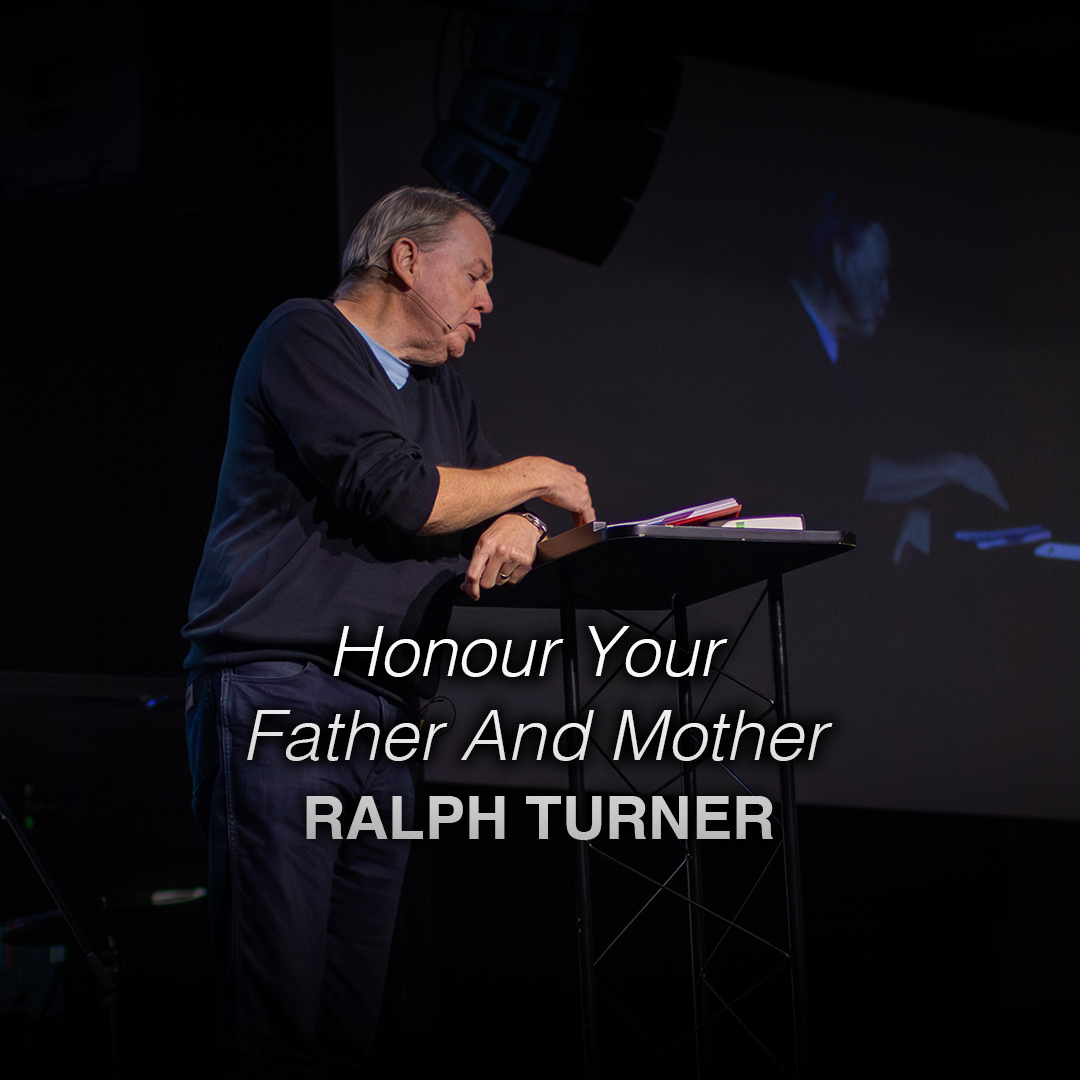
[00:01:27] Car. Well, we are in the Ten Commandments. And we've reached commandment number five today, which is all about honoring our father and our mother. So if you've got your Bibles, we're in Exodus, chapter 20, starting at verse one, Exodus 21. And we're going to stand to honor the word of the Lord. Let's stand.
[00:01:53] Exodus 21. And God spoke all these words, saying, I am the Lord your God, who brought you out of the land of Egypt, out of the house of slavery. You shall have no other gods before me. You shall not make for yourself a carved image or any likeness of anything that is in heaven above, or that is in the earth beneath, or that is in the water under the earth. You shall not bow down to them or serve them. For I am the Lord your God. A jealous God, visiting the iniquity of the fathers on the children to the third and fourth generation of those who hate me, but showing steadfast love to thousands of those who love me and keep my commandments. You shall not take the name of the Lord your God in vain. For the Lord will not hold him guiltless who takes his name in vain. Remember the Sabbath day and keep it holy. Six days you shall labor and do all your work. But the seventh day is the Sabbath to the Lord your on it, you shall not do any work, you or your son, or your daughter, your male servant, your female servant, or your livestock, or the sojourner who is within your gates. For it is six days the Lord made the heavens and the earth, the sea, and all that is in them and rested on the seventh. Therefore, the Lord blessed the Sabbath day and made it holy. And here it is. Verse 12. Honour your father and mother that your days may be long in the land that the Lord your God is giving you.
[00:03:12] Amen. Do be seated.
[00:03:16] As we come to the fifth commandment, we're actually coming to the first commandment and the only commandment with a promise.
[00:03:25] If you read that carefully, honor your father and your mother. And then there's a promise that your days may be long in the land that the Lord your God is giving you. In other words, if we do these things, we get long life.
[00:03:41] Pretty good, isn't it? If we do these things, we get blessed materially. We get blessed in the land that seems worth the effort. Don't you think?
[00:03:50] That seems worth the effort? And the new living translation says that you will live a long, full life. It's not just a long life, but a full life.
[00:03:58] I want a full life. How about you?
[00:04:01] I want a full life.
[00:04:03] I want to feel the wind of God's spirit. I want to know the fire of the Lord in my life. I want to know his fire, to experience this joy of walking with him. I want the Holy Spirit with me. I want a full life.
[00:04:18] I don't want just a long life. I want a full life. How about you?
[00:04:23] The NASB talks about a prolonged life. And within that phrase there's a suggestion that it could be a shorter.
[00:04:30] If we don't do these things, it could actually be a shorter life. The Good News version says that you may live for a long time.
[00:04:39] I intend to live for a long time.
[00:04:43] How about you?
[00:04:45] But there's a caveat. There's a promise, but there's a caveat.
[00:04:48] I like these promises. But there's a caveat that we honour our father and mother to receive these things. I like these promises. And so does the Bible. Because the Bible actually repeats this particular verse in a number of different places. In Deuteronomy 5:16.
[00:05:07] It backs up what we just read. This is what Deuteronomy 5 says. Honor your father and your mother as the Lord your God commanded you. So it's a verse that's pointing back to the Ten Commandments verse that your days may be long and that it may go well with you in the land that the Lord your God is giving you. So he's added another little phrase in there that it may go well with you.
[00:05:33] I want it to go well with me. How about you?
[00:05:37] And just in case we missed it, just in case we Missed it. Paul says it In Ephesians, Ephesians 6:2. He says this. Honor your father and mother. This is the first commandment with a promise. So Paul is saying what we've already learned, that it may go well with you and that you may live long in the land. So just in case we miss this, it's in Exodus, it's in Deuteronomy, it's in Ephesians. Have you got the message?
[00:06:04] God wants to give us a long, full life.
[00:06:09] He wants to bless our living. He wants to give us a blessing, material blessing.
[00:06:15] And the caveat.
[00:06:17] The caveat to that is that we love our father and mother. What's not to like? Long life. But there is a working out of that.
[00:06:26] Now, that may be easier for some of us than others.
[00:06:31] You may have noticed that your mum and dad are not perfect.
[00:06:35] We have Ro and I have four adult children. They're all the way in different churches around the country, but they'll often drop into YouTube to watch when I'm preaching. So I can just imagine as I'm saying that phrase, you may have noticed your mom and dad are not perfect. They're going, yes, dad, we noticed.
[00:06:56] But joking aside, there may be some here who really do struggle with this. It may be you had an abusive father, maybe you had an absent father or an alcoholic mother, but we are still called to honour them. So how do we do that? How can we do that? Well, the key to the verse we've read, the fifth commandment, is in the four before it.
[00:07:24] The key is in the four before it. Because the first four commands are all to do with the vertical, all to do with him and our relationship with Him. And if we've got the vertical right, the horizontal works too.
[00:07:41] So when we come to the fifth commandment, it's the first of the horizontal commandments. It's the first of the to do commandments, but there's four commandments before that, which are to be commandments. To be in his presence, to love him, to put him first, to have no other gods, not to take his name in vain. If we get that right, if we get our relationship with him right, then. And then the outworking of that is a lot simpler. As we get to the rest of the commandments, does that make sense?
[00:08:12] It's the vertical that helps the horizontal. And as we work out the vertical, the horizontal will work out for itself. So our duty for God in the first four commandments is worked out in our duty to others in the next six.
[00:08:29] God doesn't start with Outward relationships. He starts with him.
[00:08:34] He starts with our to do. To be with him.
[00:08:38] To be with him. And then we work the to do into the world around to be in his presence, to know him, to enjoy his relationship. And that commandment, the fifth commandment, the first of the to do commandments, if you like, is so important because he's talking about family. He's talking about family. We are family.
[00:08:58] We are in the biggest family in the world. I think I should have looked the stats, but I think it's about 2.3 billion Christians. I can get on a plane, I can travel to any nation in the world, I can get off and I'm still in the family.
[00:09:09] I'm still in God's amazing family. Isn't that an incredible thing? We are part of his family.
[00:09:15] And so when he talks about the to do commandments, the first one he talks about is family.
[00:09:21] The first one he talks about is family. When we honor our families, it's a direct reflection of his love for us. He took us dysfunctional, broken lives and brought us to himself.
[00:09:38] When as a 15 year old, I encountered Jesus Christ for the first time, I was not Mr. Perfect.
[00:09:44] I was not. And yet God reached into my mess and took me unconditionally. Took me.
[00:09:53] His unconditional love changed me. At that moment, I was dysfunctional. He took me anyway. Our families are dysfunctional. We love them anyway.
[00:10:07] We love them anyway.
[00:10:10] We don't wait for our mum and dad to be perfect before we honor them. We would be waiting a long time. My children are nodding again.
[00:10:18] In the culture of the ancient near east, this was much more usual. There was a higher regard, if you like, for people in authority, particularly for parents, than perhaps is common in our society today. We see it in Jesus. I mean, Jesus is God become man and yet he obeys Joseph and Mary.
[00:10:38] If Jesus did that, how much more should we? Jesus, even on the cross, was looking out for his mother and asking John to look after her.
[00:10:51] So this is the first of the horizontal commands, how we treat others. But it's the gateway for the others. You see, if I've got that sorted out, if I can honour my mother and father, if I've got a family relationship that is secure, then I can work that out in the other commandments. If I've got that straight, I'm on solid ground. I am less likely to fall with the other commands. I'm less likely to murder, I'm less likely to steal, I'm less likely to commit adultery. Why? Because I'm firmly on the rock of what he has done in my life and set me in a family. We are family and we can encourage each other in these things. That we honour our mother and father. It's the gateway to the other commandments.
[00:11:36] We will have a good understanding of life, which means that we don't murder, that we don't steal. And why can we do that? Because we honour, first of all, we honour. The relationship with our parents is so significant. It's the first earthly relationship that the Commandments address.
[00:11:55] So our parents are pretty important.
[00:11:58] This is kind of a pivotal commandment in the Ten Commandments, this fifth one. We've got the four before it that's pointing to him, the vertical, and then we've got the ones after it that's working out. And yet this is the first one. And it's the one with a promise. It's the one with a command, but it's the one with a promise. If we honour our mum and dad, then we are able to receive full, long life. We're able to receive blessing, practical blessing. It pivots into all the other commandments as well. Well, we all have parents.
[00:12:30] Obvious statements of the morning.
[00:12:33] On a purely natural order.
[00:12:36] Our parents are the cause for our existence.
[00:12:39] Isn't that right? Our parents are the cause for our existence. And for most of us, parents provided pretty much everything we needed as children to survive and flourish.
[00:12:51] They provided food, drink, shelter, clothing, all of these things, even if they were imperfect, they were providing education, emotional strength, life lessons, even spiritual direction on occasion. Our parents were able to provide, and they provide wonderful experiences, too, things that we remember even as we grow old. We remember the going to the park, the bedtime stories.
[00:13:20] We remember the playing sports or the practicing musical instruments. I used to try and play the flute.
[00:13:26] My parents were very patient.
[00:13:28] We remember the laughter around the table, the family holidays. The list is endless. We remember what our parents have done. And we owe so much of our life, so much of our personality to our parents, even if they were imperfect parents. My parents were rather formal. It was just kind of after the war years, they were a little bit. My dad especially was quite formal. He would shake your hand, not give you a hug. I always tried to give him a hug, I really did. So, you know, I'd say, dad, Dad, I got the job. And I'd go and try and give him a hug. And he'd say, that's good, son, well done.
[00:14:09] Or, you know, when the kids arrive, dad, you're gonna be a granddad. Oh, I'm so proud, son. Well done.
[00:14:16] There's that kind of formal relationship with dad.
[00:14:20] Dad died a couple of years ago at the good old age of 98.
[00:14:23] And in his last couple of years he was in bed for the most part, so I got my own back.
[00:14:30] He couldn't move, so we got lots of hugs.
[00:14:34] And he also found Jesus Christ. So I'm so grateful for that.
[00:14:41] But with parents, it's not always, always easy. Not always easy. Growing up, who remembers the parents? Rules, Share everything. I did not want to share with my sister.
[00:14:52] I did not. Why should I play fair?
[00:14:56] Don't hit people.
[00:14:59] Put things back where you found them. Anyone had that one?
[00:15:03] Clean your mess, Flush, or is that just me?
[00:15:11] Milk is good for you.
[00:15:16] There are times when it's easier to obey. There are times when it's harder. It's harder to obey our parents. I'm married to the beautiful Rohini.
[00:15:26] Ro is from Indian heritage.
[00:15:30] Her parents were Hindu. When she became a Christian at 16, she went home to her parents and said, I'm a Christian, I want to be baptized.
[00:15:39] They kept her indoors for two years as a result of that.
[00:15:43] Not literally, they let her out, but they were monitoring her. They wouldn't let her go to church. They certainly wouldn't let her get baptized. Now, that was a hard one for Ro.
[00:15:52] She could have moved in with a friend, but she chose to honor her parents.
[00:16:00] And after two years she got away to nursing college, she was baptized, she joined the church and met me.
[00:16:11] But, you know, Ro's dad died a few years ago now. Before he died, he found Jesus.
[00:16:18] And I really think that something of her faithfulness, of her honoring her parents in that two years brought out that final relationship with Jesus Christ. In fact, she was here first service, she's not here second service. And the reason is she's actually looking after her mum today.
[00:16:38] So still it goes on. Still we honor our parents.
[00:16:43] It's not always easy.
[00:16:46] We can assume if parents were easy to love, we wouldn't need the commandment, right?
[00:16:52] Why is there a Commandment?
[00:16:54] Because it's not easy.
[00:16:56] We can assume we would be tempted not to honour them. That's why there's a commandment. We can assume that it can be hard or confusing or painful at times, but that's why there's the commandment. It's not always easy. Now, we're adults to honour our parents.
[00:17:12] And some folks may only have a few memories of their parents, they may have no memories of their parents.
[00:17:19] Ro and I have got a very good friend called Lisa in Peterborough. Lisa got Saved in, I think it would have been her mid-30s. She became a Christian.
[00:17:29] And pretty soon after that she went on a bit of a cleanup course, really, just getting some prayer and some ministry, particularly into rejection because her father had walked out when she was three years old.
[00:17:44] She'd had no contact with him since. She had no real memory of having a dad.
[00:17:51] But as she came to Christ and as God ministered to her and dealt with that hurt and that rejection, she decided to do something. She decided to write to her dad.
[00:18:01] She needed to do a bit of research to find where he was, but she found him and she wrote a letter. Within a week she got a letter back.
[00:18:08] It actually arrived on her birthday.
[00:18:11] He had replied straight away. They then wrote to each other a few times. And then eventually they met up.
[00:18:18] And Lisa tells the story, something she told me a few years ago. Let me read it to you. This is Lisa's story of meeting her dad as an adult for the first time since the age of three.
[00:18:29] That day, the day that we met, he hugged me.
[00:18:35] I finally had a dad's hug.
[00:18:38] He told me he loved me. He told me he'd always loved me, he'd always cared. I just didn't know it.
[00:18:45] Five years on, we're still talking. I call him dad and I love him dearly. All feelings of rejection are gone. I love what God has done now. I just contacted Lisa last week because there's another 10 years since she wrote that. And still they're meeting, still she loves him, still she gets the dad hugs. Isn't that beautiful?
[00:19:09] Just an amazing reconciliation.
[00:19:13] Now, I have to say that may not be possible for all of us. It may be that, you know, our parents have died, perhaps. It may be that it just wouldn't be appropriate to try and reach out to our parents. The Bible instructs us to honor our parents. It doesn't command us to stay in harm's way.
[00:19:32] So if you have an abusive parent, do all you can to remove yourself from a life threatening situation. And if you've had abuse and you want to reach out again to your parents, get a bit of counsel first before you write that letter, before you send that email, just to make sure and find that protection. But even then, you know, we can honour our parents. Even in the hardest circumstances, we can still honor our parents by letting go of the hurts, letting go of the rejection, the judgment, the things that we hold against them. Let God deal with that. Let God deal with that and be free. Allow God's freedom to come.
[00:20:12] How can we practically Help our parents. A very practical talk this morning, honoring your parents. Honoring your father and mother. How those of us who've got parents who are still alive, how can we practically help them? Well, here's a few things. Number one, tell them you love them.
[00:20:27] Just do that with dad.
[00:20:29] Love your dad.
[00:20:30] Ew, that's nice, son.
[00:20:35] Tell them you love them.
[00:20:36] Do chores for them, especially as they get older.
[00:20:39] Take an interest in their hobbies.
[00:20:42] My kids hopefully are watching this on YouTube at some time. Kids, take an interest in your parents hobbies. Why won't you do stamp collecting?
[00:20:55] I don't understand.
[00:20:58] Strange that.
[00:21:01] Ask them about their day.
[00:21:04] Listen to their stories, Share your stories with them.
[00:21:10] Ask them for their opinion on things, Speak well of them.
[00:21:17] Plan time with them because they're not here forever.
[00:21:22] And amazingly, all of these things, as we honor our father and mother, come with a promise. Long life and prosperity. God invites us to live long and prosper. Who knew Star Trek had Christian values?
[00:21:40] Live long and prosper.
[00:21:42] But that's what God is saying in this particular, that your days may be long in the land of the Lord, which God is giving you blessings of life, blessings of goodness, blessings of prosperity. And Paul repeats it, remember? So it's not just a promise to the Israelites of old, it's a promise to the new Israel, to the church, to you, to me. We can take hold of this promise. God can and will bless us if we honour our parents. And that blessing may come in many ways. Just imagine if every one of us here reached out in every way we could to honor our parents. What blessing would come our way? What blessing would come to the church at a time when we're trying to sort buildings and all that sort of stuff?
[00:22:22] God speaks of blessings now. But there's also inherent within these scriptures, an eternal blessing. There will be a final live long and prosper.
[00:22:33] Beyond these days, beyond the days that we live. One day this earth will become a garden again.
[00:22:41] One day the garden that Adam and Eve were thrown out of will be inhabited again. The tree of life that we read about in Revelation is the tree of life that we read about in the garden. There will be full restoration. There will be a new day. I look forward to that completeness when Jesus comes again. But in the meantime, in the meantime, honour your father and mother and receive long life and blessing. When Moses received these 10 commandments, it was for people who were not yet home.
[00:23:16] They left Egypt, but they hadn't found the promised land.
[00:23:22] And it's the same for us. The whole message of the Bible.
[00:23:25] The whole message of the Bible is the human race as a band of exiles trying to come home.
[00:23:37] The human race is a band of exiles trying to to come home.
[00:23:41] In this world without Christ, we wander aimlessly. We're like the prodigal who went away from his father into everything that was a mess.
[00:23:52] And yet, in that prodigal story, just one step towards him and he's running to you. He's running to us, to welcome us home. That is our God. Our relationship with him enables us to love and honour our parents. The vertical enables the horizontal to work. And for those without positive memories of their parents, the key will be forgiveness. The key will be release from rejection. You see, in the end, teachers will come and go.
[00:24:23] Bosses will be hired and retire.
[00:24:28] Prime ministers will be elected and leave office.
[00:24:33] Whole nations will rise and fall. But our parents will always be our parents.
[00:24:39] Our parents will always be our parents. God, with literally billions of options, chose this mother and that father for you.
[00:24:50] That's beautiful.
[00:24:51] He chose your parents. So will you honour him by honoring them?
[00:24:59] Even if it's hard, will you honor his, him by honoring them? God wants the best for us in our lives, in our relationships. You know that Deuteronomy verse? Remember what it says? Honor your father and mother as God commanded you. That your days may be long and that it may go well with you. That it may go well with you.
[00:25:22] I want it to go well with me, and I want it to go well with you. My prayer for each of you.
[00:25:29] Actually, John says it even better in 3 John, verse 2. He's kind of repeating these verses we've been reading in the Old Testament. 3 John. By the way, John's second and third letter only just crept into the New Testament. Some of the early church fathers thought that maybe they were a bit short. But I'm glad that they're there because of this verse in particular. This is what 3 John 2 says. I pray that all may go well with you and that you may be in good health as it goes well with your soul.
[00:26:05] Isn't that beautiful?
[00:26:07] What a blessing. And it's capturing the blessing of the fifth Commandment. It's capturing the blessings that we read in Deuteronomy. I pray that all may go well with you and that you may be in good health as it goes well with your soul.
[00:26:27] I'm so grateful for my parents.
[00:26:30] They're with the Lord now.
[00:26:32] But I'm so grateful for their love.
[00:26:36] But whatever our background, whoever our parents are, whether we know them or whether we don't Whether we can love them or that's for an eternity, Deck.
[00:26:47] Let's honor them, let's speak well of them and see what blessings God will give. I want to finish with a story.
[00:26:55] If you've been on the New Life course, it's a story that Ro and I have shared there a number of times.
[00:27:01] And in fact, I used to do this a lot in evangelism in days gone by.
[00:27:08] It's from a book called what's so Amazing About Grace?
[00:27:14] By an American author called Philip Yancey. I had the privilege of meeting Philip and I asked him whether this was a true story. I was using it so much in evangelism and stuff, I wanted to know it was true. He said, yes, it is absolutely true. And the story is about a girl called Ali. Ali's in America.
[00:27:30] She's from a good family.
[00:27:32] It's quite a nice kind of suburb in America. Big house, mum, dad, sister.
[00:27:38] But despite the blessing of that, as she gets into her teenage years, she gets more and more angry, more and more argumentative with mom and dad.
[00:27:48] There's a lot of screaming matches, there's a lot of shouting.
[00:27:53] So much so that one day it gets so bad, she storms up the stairs, slams her bedroom door and decides she's going to run away.
[00:28:02] Well, it happens that the very next day is a teacher training day, you know, where the kids are home and the teachers are doing some training. So she did.
[00:28:13] She ran away. Mum and dad both went off to work. Her younger sister went to junior school, but here she was at home. She packed her bag, she took what money she had and she left.
[00:28:23] She took a bus and she went to Detroit in America. Apologies if any of you from Detroit, but it's probably not the prettiest city.
[00:28:33] It's a bit of a rust bucket, and that's what it's been called. And she went there deliberately because she thought there she wouldn't be found. No one would think she'd go to Detroit, right?
[00:28:45] And she got off the bus in the late afternoon in Detroit.
[00:28:50] And at that moment there was something inside that was saying, what are you doing? What are you doing? You're crazy, go home. But there was a bit of pride as well, and she wouldn't. And so as the evening wore on, she got cold and she found the only place she could keep warm was outside a shop. It was an old fashioned shop with one of those heat vents, do you remember those? The kind of heat blowing up. And so she sat in the warmth of that heat opposite the shop and she was still there at 2 o' clock in the morning when the car pulled up. Very fancy car, Mercedes. Guy got out, beautiful smart suit. And he said, hey, what are you doing?
[00:29:29] You're freezed to death. Come on, get in the car. I'll put you in a hotel for the night.
[00:29:34] She got in the car and he did what he said. He put her in a hotel for the night and the next morning he came to see her and he said, hey, actually, you can stay here as long as you like.
[00:29:44] You can as long as you like, just as long as you do a few favors for me and my friends.
[00:29:52] Within a week, she was a prostitute.
[00:29:56] This carried on a while and she got more and more depressed. She was so ashamed of what she was doing.
[00:30:03] The guy noticed and he said, hey, you don't need to be like this. Take some of these.
[00:30:08] Within a month, she was a prostitute and a drug addict.
[00:30:12] And that's how it went for most of the year. She thought about her parents. One time she even saw her face on a milk carton in America. I don't know if they still do, but they used to have milk cartons on where there'd be an artist's impression of the children that had run away. And one day she saw her face and she nearly picked up the phone and said, I'm coming home. But she didn't. She stayed. And that lasted for about a year. At the end of a year, she got sick. The same guy came to her. He said, you're no good to me now. You're sick.
[00:30:41] Out you go.
[00:30:42] Gave her some money and she left.
[00:30:45] And that afternoon she found herself outside the same shop, sitting under the same hot air vent as a year before. But this time she came to her senses.
[00:30:58] She decided she would call home. This was before mobile phones, kids. There were days before mobile phones.
[00:31:07] And she found a phone box and she phoned home and she got the answer phone.
[00:31:14] What do you do when you've been out of touch with your parents for over a year and you get the answer phone? Well, she did the only thing she could do. She left a message. Mum, dad, it's me.
[00:31:25] I am so sorry for what I've done. I've been so stupid. But I'm going to be on the bus tonight, going to be on the coach home.
[00:31:35] It gets into our town at one o' clock in the morning and if you're there at the bus station, great.
[00:31:42] But if you're not, I understand. I do understand. I'll just stay on the bus and I'll keep Going.
[00:31:48] And so she got on the bus. And of course, immediately all of these thoughts are churning inside her.
[00:31:54] What if I didn't phone the right number?
[00:31:58] What if they don't pick up the message?
[00:32:02] What if they never hear my message?
[00:32:05] All of these things are going on as the journey goes on. She's trying to prepare in her head the kind of thing that she should be saying to her parents when she arrives.
[00:32:14] Well, the coach pulls in exactly at 1:00 clock into the town where she lives. And the driver stops and he says, okay, folks, 10 minute break. The washrooms are on the left. 10 minutes, we're on our way. Everyone gets off the bus, they go to the washroom. She goes the other way towards the bus office, and it's in darkness.
[00:32:38] And she thinks, oh, no, okay. But she walks over there anyway, and she gets to the bus terminal, and even though it's all dark, she pushes the door and the door opens. And the moment the door opens, the lights come on. And there's shouting and there's cheering and there's 20, 30, 40 people cheering and shouting. There's welcome home banners and there's balloons and there's party poppers and all sorts of people jumping and shouting. And there's all our old school friends jumping for all they're worth. And on the other side, there's her friends and her neighbors, her grandparents, her aunts and uncle. And right in the middle are her family, her sister, desperately holding onto the dog. And right in the middle are mom and dad. And before she can take a step forward, her dad breaks through the crowd and runs to her and embraces her and says, welcome home.
[00:33:30] Welcome home.
[00:33:33] That's what he's done for us.
[00:33:36] That's what he's done for us.
[00:33:38] I've told that story so many times, and I still cry because that's our God.
[00:33:44] Unconditional love.
[00:33:48] Despite all we've done, he loves us.
[00:33:52] If he's done that for us, how about we honor our father and our mother that we may have full life and blessings from the Lord.
[00:34:08] Amen.
[00:34:11] Let's stand. Let's pray together.
[00:34:17] Thanks for listening to the Cromer Church Podcast. If you enjoyed this message, you can like and subscribe. You can also join us in person or online every Sunday at Cromer Church. For more information about us us, including our ministries, events, worship and how to donate, visit our website at Chroma Church.