Episode Transcript
[00:00:02] Speaker A: Welcome to the Chroma Charge podcast.
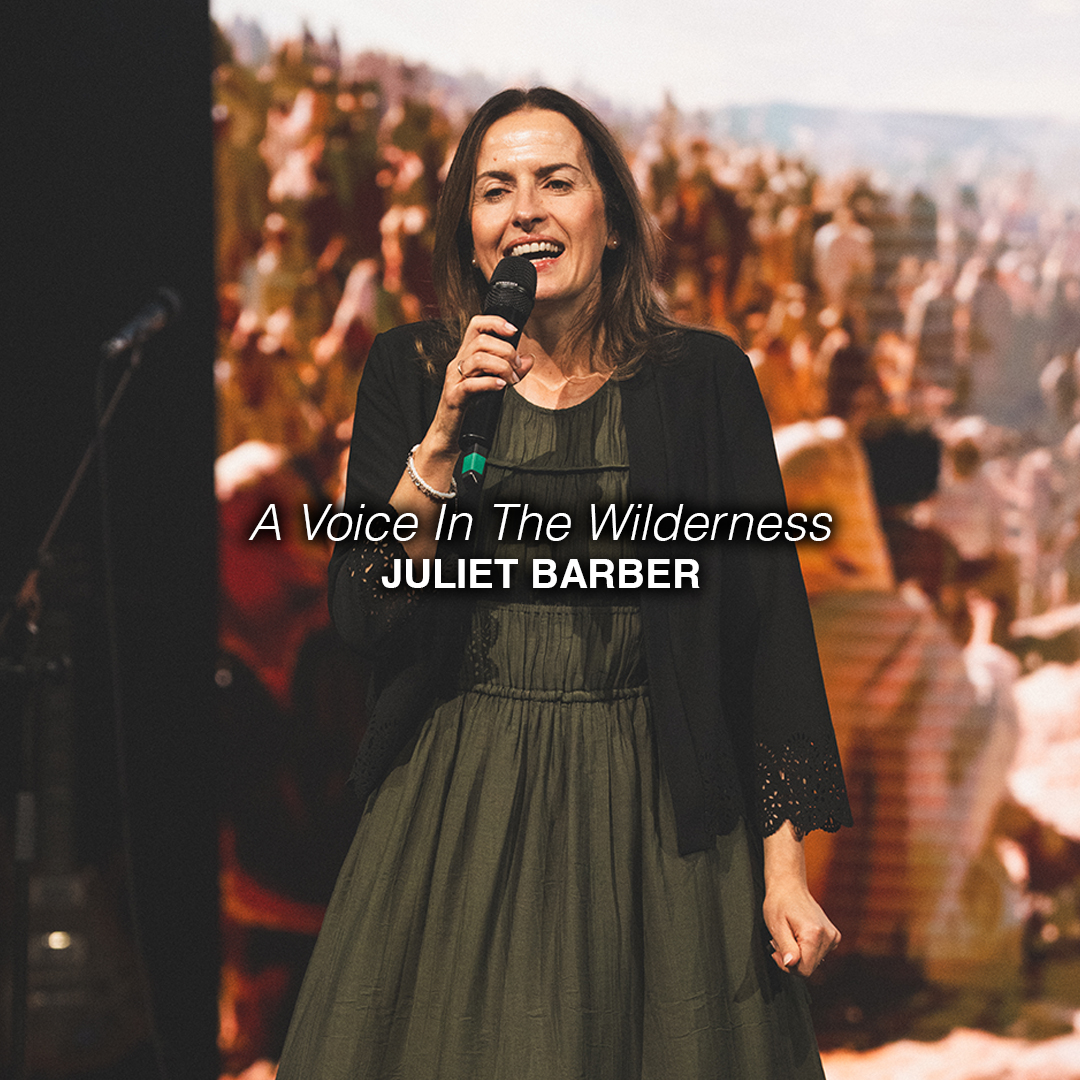
[00:00:08] Speaker B: This morning I have a word to share with you. It's actually a word that I shared at our recent leaders gathering.
I was going to do like a skinny version for church on Sunday. And just the way it worked out, there was some building stuff, and I never got to share this word. And so I want to do that this morning. We've been talking about Jesus stories, really. We've been talking about stories of faith and stories of healing. And this word that I want to share with you this morning, it's slightly deviating, but it does fit because I want to talk to you about the announcement of the kingdom, about the word that we speak that announces his kingdom come. And, you know, we've just been doing that as we've been ministering, healing, and Steve was referring to it. See here.
Rise up in Jesus name. Your sins are forgiven you that we sometimes we make these announcements and we partner with the will of heaven and as we announce the kingdom comes in that place. And that's a little bit of what I want to talk about today. You know, we. Many prophets have been saying this. They've been saying, prepare the way.
Prepare the way of the Lord.
And lots of prophets have been saying it in lots of different ways that we know we're in this season of preparation and his kingdom come. And often we're talking about that in our context, and we're hearing about it as revival, as a quickening as God moving on our land. But this word, prepare the way of the Lord, it's a word that's spoken in the Gospels through John the Baptist. It's a word that's spoken by the prophet Isaiah. Isaiah 40. I want to read to you from the Gospel of Luke. Grab your Bibles. We're just going to read this word together. Will you stand? It's just a short passage of scripture that I wanted to read with you today.
But it refers to a longer passage in Isaiah 40, which you could go home and read if you want to.
But John the Baptist, he says this. He says, this is Luke 3 from 4 as it is written in the books of the words Isaiah the prophet, the voice of one crying in the wilderness, prepare the way of the Lord.
Now, when it says that, you know, this phrase is like a circular motion. In some Translations, it says, prepare the way for the Lord. I always, you know, interchange between the 2. In the NIV, it says prepare the way for the Lord in many traditional translations. Prepare the way of the Lord. Why? Because. Well, it's of and for so as in, the king is coming. And if the Lord says he's coming, he's going to come. There's nothing we can do to change that. He's coming. His kingdom is coming. Redemption for our fallen, broken world is in his hands. He's coming. The king always comes. But it's a circular motion also. Prepare the way for the Lord, because we have something to do.
We have something to partner with to get ready to be ready for the coming of the kingdom.
And so two words.
Prepare the way of the Lord. Prepare the way for the Lord. Make straight. Make his path straight. Every valley shall be filled. In Isaiah 40 it says, Every valley shall be raised up, and every mountain and hill be made low. And the crooked shall become straight, and the rough places shall become level ways, and all flesh shall see the salvation of God. In Isaiah 40 it says, for the mouth of the Lord has spoken. This is going to happen.
And so John the Baptist is quoting from this prophetic promise. You may take a seat. It's a promise that echoes throughout the whole of Scripture. It is the story of the redeeming love of God. The king always comes. He always comes to rescue his people. As John the Baptist declared it, he was in the fulfillment of the promise.
It's a waiting word. It's an expecting word where we declare, he's coming, he's coming. But it quickens at certain times. And this was a quickening because the king had come. They were standing in the middle of the fulfillment of that promise, and he's saying, repent. Get ready. Repent. He's coming.
For Isaiah, it was a long season of waiting, because he declares it in the context of bringing comfort to God's people in exile.
A long season of waiting for rescue would come upon God's people where he was calling upon the people to look, look towards the promise that would reach a generation not yet born to prepare for his coming, his rescue, that would see a remnant return and rebuild the ancient ruins and return from exile.
It means different things at different times, but it's a word all the way through Scripture. But we live in the ultimate promise of the fulfillment of this word, because Jesus has already come.
And so we look back and we see that Jesus has come and everything has been accomplished on the cross. But we also live in between times, and we look forward to when Jesus will return again. We are in the now and not yet, though we err towards the now, because Jesus has accomplished everything on the cross. And so we still live in the context of this word, saying, prepare the way. The kingdom has come and it's coming. The king has come and he's coming. So we prepare and we're expectant. But there are seasons of time where it really, really quickens, seasons that we call revival. And that's why the prophets are saying, prepare the way. Prepare the way. God is on the move.
And it's a word that we've been in as a church for the last 10 years, because we've been preparing, haven't we?
We've been yielding, we've been bending under the weight of his glory. We've been saying, whatever you want, Holy Spirit, you can have your way here. We're preparing for the King of glory to ride in. To ride in, for his move to come upon our land. We're praying, we're preparing, we're waiting.
But the Lord began to show me that there is another part of this word that is the voice that cries out in the wilderness that prepares the way for the Lord. I began to see a different emphasis on this prophetic promise that many people are talking about at the moment that I just want to press into a little bit today.
And God began to speak to me about this when I was on holiday, actually in the summer, and I was reading the books of Ezra, Nehemiah, Haggai, Zechariah, and Malachi in this season of the Old Testament. I just wanted to read around the revival that happened in the Old Testament, where exiles return and rebuild and all the prophetic promises that came into that season. I wanted to hear it all together and just allow the Lord to speak. We had, through the summer, been teaching through the book of Nehemiah, you remember, and we were talking about the build and the building ahead of us and the rebuild and all that God was speaking to us about in and through that book. So I wanted to read all these books together. So I'm just praying and enjoying these books, and I get to the end and the Lord says to me, and now I want you to read Esther.
And now I know that Esther is a part of this season of history for God's people, but she's not in the sort of return, rebuild, remnant, return, post exile bit. She sort of sits in the hard part. She sits in the bit where they're in exile and she has to marry the foreign king. It's the hard part, the dark part. But of course, the story is connected because her story, as we're going to unpack a little bit in a minute, but as this sort of moment of salvation for God's people plays a part in their ability to actually return and rebuild. And so they are connected. So I knew the stories were connected. So, anyway, I started reading the story and then went to bed. And I woke up in the morning to the news that Ann Widdicombe had died.
Now, Ann Widdekom was a politician. Many of you, maybe many of you won't know about her. I didn't know that much about her. But I just started to read this story of this politician who died, and Steve began to tell me that she was a Christian, and she was a Christian who in government, had championed God's ways.
Now, listen, as I talk about this, I'm going to ask you to park your politics for a moment, because Anne Widdicombe sat in latter years on the extreme right of the political view.
And, you know, one of the things I've noticed for Christians in the last five years is that Christians have so many opinions about politics. They have a hard time seeing the Christians in government because of their politics.
And I think we're meant to see the Christian before we see their politics.
You know, we were at Aviva Miento Church a few years ago, and they had a whole bunch. They were just about to have an election, and they had a whole bunch of politicians at their revival meeting, and they stood them all up. And Pastor Ricardo and Pastor Patricia said, forget about where they sit in government. Forget about their politics.
They said, we need Christians in every, every sphere of politics. We need Christians to be in there.
And so then they said, stretch out your hands. We're going to pray for them all. We're going to pray for the anointing of God to come upon them all so that they can be a light in the place that they're called to forget her politics and see the Christian.
She was a woman who championed traditional Christian values in government. I did not agree with everything she said.
For starters, she didn't agree with women in leadership in the church. I'm like, how does that work when you, in fact, were a woman in leadership? It's weird, isn't it? I was like, I don't understand that. I don't necessarily agree with that. But she was pro life.
She was pro the beginning of life, and she was pro the end of life. And isn't it interesting that the assisted dying bill was not passed?
You know, there were Christians in government who were championing God's values, who were being a voice, and she was one of them. Anyway, I read the rest of Esther that day. I go to sleep and I Wake up to the news that she was murdered. And this. I just feel this, like, deep grieving in my spirit.
And I just felt this sense of this voice that's been snuffed out. And the Holy Spirit said to me, who will take her place?
And I'm like, definitely not me, Lord.
Seriously, Lord, do you know my city? Do you know my church? Like, I'm just an Essex girl. I know nothing. Sorry. If you're an Essex girl here, that's not derogatory. It's just a joke. It's like, I'm just a little old me. I'm not political. I could never do that. Now, here's the thing. You might laugh and think, why would you even ask? But you see, the thing is, the Lord sometimes, precisely because you can't do something, will ask you to do something, because it's not about us, it's about him. So I'm humbly before the Lord, having this funny little dialogue. And then I felt this smile of the Lord, and I just felt this overarching sense of what God was saying and why. I was reading Esther, you see, she was a voice, a voice that cried out in the wilderness, a dark place, a place that is not yet God, John the Baptist, Isaiah, people like Anne Widdicombe, who will go into government, who will go into spheres of authority and influence, to be a voice. And Esther was a similar voice.
And I just want to unpack a little bit this morning of what I feel like God is impressing upon me on us for this season of opportunity that we're in in.
You know, it isn't always about our voices. Sometimes it's just about the place that we choose to stand and the people God calls us to stand with, to be a city on a hill, to be a light in a dark place.
And the story of Esther is just like this. Many of you will know the story. Many of you will have read the story. Some of you are fairly new Christians and you've not read the story of Esther. You could go back and read it. I just want to summarize it for you this morning so that I can just pull out a couple of things. I felt the Holy Spirit show me over the summer, the story goes, during exile, you know, it a dark time for God's people. A young Jewish virgin is taken in to the harem of a foreign king. It's so dark that in itself, to be married to a foreign king was against God's law.
Esther's parents have died. Mordecai is her uncle, and her carer. When this happens many times when this story is told, it's told from the perspective of the beauty within it, because there is beauty within it. But it isn't just a beautiful story.
It's a really hard and sad story about God's people in a dark and hard, horrible time where God's people are abused, where nobody has respect for God's ways.
But what we see in the story is the kindness and the providence of God working in and through the mess of the brokenness of people and he rescues through this story of Esther marrying this foreign king. It's a picture, you know, I can't imagine what it was like. I can't imagine what it would be like to have to do such a horrible thing. You know, what we do is often when we read these Old Testament stories, we just kind of put them in the box of that was then and this is now.
The context helps us to gloss it over and say, well, it's just what happened then, you know? Only in Jesus did we have the instruction that a husband should have one wife. Even amongst the Jewish people, women would share their husband with multiple women. And here this woman goes into the king's harem to be one of many.
It's so dark and it's so ugly. But we have to go there, you see, because these stories, they're not that was then and this is now. They're stories that give us a glimpse into the heart, the character of God.
They're pictures of the kingdom and how God is working through the mess and brokenness of lives and individuals and our history to bring about his purposes and plans.
See, the story goes, she wins favor and honor. We know the story of the beloved king when Mordecai, her uncle, will not bow down to the king's aid. Haman and all the Jewish people are about to be snuffed out.
After some wailing on the street and some sackcloth and ashes, there is this famous line. Who knows but that you have come to the kingdom for such a time as this.
A moment where she would have a voice in that dark place.
She asked for a party, a moment of wisdom.
And Haman, the king's aide, is exposed.
And this narrative makes a way for God to rescue his people.
But first she had to stand in that dark and ugly place and wait for that moment where she could have a voice, where she could speak up. She was a voice, a picture of a voice in the wilderness. And here's my point.
To be a voice in the wilderness, we have to be Willing to go to the darkest and ugliest, dirtiest places of society and be his voice.
They are not the places of comfort and ease.
You know, John the Baptist, Anne Widdicombe, Isaiah, Esther, they're all a version of this, you see, not to go to the comfortable, nice, easy place, but to go to the dark, horrible place and be a voice. Because, you see, by definition, a voice, voice in the wilderness is to stand in what is not yet God and make straight in the desert a highway for God. It's to put a stake in the ground and say our God reigns.
It means so many things to so many different situations, circumstances and individuals. It's a corporate standing. It's what the church does, but it also means something to us as individuals.
It's not standing in the comfortable place. It's being willing to go into the hard places. And, you know, some of you may be sitting here thinking, I know exactly what you mean. Because I'm in one of those places right now in my family, in my job, in my this, in my that.
I know I'm there and it feels really dark and I'd like to just run out of there. To be quite honest with you. I'm dreaming of other things where I could just get out of this godforsaken place. But perhaps God has called us for such a time as this to stand in that place and wait for that moment where we can be a voice and make way.
And we need to embrace the moment and ask the Lord to give us a voice.
For some of us, we know that we're in that place, but we just feel like we can't speak. And we need to ask God to make, to show us, to anoint our voices, to be bold, to be courageous for others of us. You're like, I don't know what the heck she's talking about.
What is she talking about and what. I don't know what you mean. Well, I want to say to you really, really gently and nicely kindly.
We could just be a little bit too comfortable if that's the case, because we are called to stand in these places that are not yet God and be a voice. And they are not the places of comfort.
And I want to say to you really, really gently that in the Western church, comfort has become a bit of an idol.
Me being comfortable, me being blessed.
You know, Jesus said, pick up your cross and follow me.
Jesus said, blessed are you when you mourn, blessed are you when you are persecuted. Yes, the salvation of our Lord is a great and glorious thing. And Our sin is forgiven, and he's making us new, and he's transforming our lives. And he's blessing us, but he's blessing us so that we can be a blessing. Not in the easy places, but. But in the hard places.
And, you know, there's a spectrum, a 1 to 10 spectrum. I think Ann Widdicombe, I think Esther, I think John the Baptist are like a 10 of what sort of price they would have to pay to stand in that place.
But for you and I, it may look different. And I just want to touch on this and say, the voice that prepares the way in the wilderness for the Lord to come, that will make straight in the desert a highway for our God is a voice that stands in the wilderness, not in the place of comfort, number one.
Number two, this is risky.
You know, Esther was better than all the rest.
She was better than all the rest in that place.
You know, to stand in these places of discomfort and ugliness, these hard places in society, we need to know who we are in Christ. And we talk about this a lot. We talk about being sons and daughters and heirs, royalty.
We know it. Romans 8. We know that we're royal adopted children of God and we don't have to fear. We know.
1 Peter 2 that we are a royal chosen priesthood. But what does that really mean?
Does it mean we walk around being princes and princesses kind of.
But, you know, royalty isn't really royalty in the palace. I know the royals are royal in the palace, but I'll bet when they shut the door, they kick off their shoes and put their slippers on, you know, eat chips in front of the telly. Maybe they don't do that. Maybe that's disrespectful. But you know what I mean. They're royal when they're out in all their stuff, you know, waving when they're out in the marketplace.
What does it mean for us to be royal?
See, Esther was better.
Why was she chosen? Because she was better than all the rest. Can we really go there?
This is the picture in the story. You know, it says in chapter one that the queen that was cast out, that wouldn't come into the king on his.
Come here on his announcement, on his command. Who wouldn't come in wearing her crown to a drunken party with all of his friends.
And some commentators believe he was commanding her to come in wearing only her crown. You know, I think she knew what would happen when she didn't go into that place. I think she'd had enough.
I don't think this was an easy place to be. And it says that the King's aide says, we must find someone better than Queen Vashti. Better.
And then it says she went into the King's harem and she won the favour of all who were there.
And we look at that and again we gloss it over and say, well, that was just the divine providence and will of God.
It was God's favour making a way for her. It was God's favor making a way for her. But it was also her decision to partner with what was happening, to stand head and shoulders above the rest and to be the best. And it's like, oh, I don't. This is.
What does that really mean?
You know, it says that she was so favoured that she was given all these cosmetics and she was given girls to serve her. And then when she, after a year of beauty treatments, was taken in for a night with the King, when he was deciding which one he'd pick, it says that he loved her more than all the other women. What is that about? Can we go there?
It's a hard picture, isn't it?
Was it her seduction? I don't think so.
She was a virgin.
Was it her beauty? Well, she would have been beautiful, but so were all the others.
See, I think the moment Esther walked into that room, they knew she's the one.
She was God's choice.
And as she walked in there with her head held high, I think they knew she's the royal one. She's the one. She's the one that's just got it.
She was better than all the rest.
Do you remember when Kate Middleton came on the scene?
Kate Middleton, who's now married to Prince William, Princess Kate?
I do, because everybody was saying she's a commoner. I mean, I know. I mean, whatever you think about the royal family, I know she lived a privileged life. I know she did. Of course she did. But she wasn't a royal.
And the royals generally pick distant relatives who are royal. Why? Because they know how to be royal.
She just was, though. I remember the first time I saw her and I thought, she's going to be the one. They're going to pick her because there was a grace and there was something about the way she held her head high. These are pictures, you understand, of what it is for you and I to walk into the darkest places. To stand, to live, to work, to be in, to be sent into the darkest, hardest places of society. We don't run away. We run in and we hold our heads up high, knowing who he Says, we are. We are the royalty of God.
And it's okay to be better. And it's okay to know because of God's favor and grace upon our lives, we can rise up and be better than all the rest.
You know, I don't think that. I mean, Ann Widdicombe, I'm like, you know, I don't want to be offensive, but she wasn't, like, a great beauty. I'm not being rude. Don't want to be rude. Please don't tell anybody I said that.
Don't share the live stream.
I'm just like, what was it about her? I mean, I just think you would never want to mess with that lady.
If you watch videos of her, she's like, she had a voice.
John the Baptist, out in the desert, he was the weird one, wasn't he? Everyone's like that. John the Baptist, he's so weird. I mean, he's so weird. But we're never gonna forget him.
And when he preaches, when he preaches, repent. It's like fire. We all wanna run when he preaches that word. He was a good preacher. Better.
It's okay to be the best. It's okay to stand head and shoulders above everyone else. A city on a hill that cannot be hidden. We are.
It's how we stand, and it's how we gain a way to have a voice.
And the end of the story.
This is the last thing I want to say in the end of the story. I don't have time to read it, but you can go back and read the last few chapters, the middle part, and the last few chapters of Esther. But the story goes that Mordecai, after being in sackcloth and ashes in the street, wailing, speaks through a servant and just calls out to Esther, who at that moment isn't really listening because she doesn't really want to do what he's going to ask and says, you know, Esther, don't think that if you. I'm just paraphrasing here. Don't think that if you don't speak, if you don't rise up, that God won't bring somebody from somewhere else. He will. But you and your whole family could perish.
You know, there's a consequence when we don't speak up.
God is going to. This is the circular movement of the voice that cries out in the wilderness. Prepare the way of the Lord. Prepare the way for the Lord. The king is coming. He always comes. His will will be done on earth as it is in heaven. But you and I have a opportunity right now. And there is a door that's open for the gospel. There is a door that's open in government. There's a door that's open in politics and in the public sector and in the private sector and in business, in your family, amongst your friends, in university, in places of academia. There are doors that are opening right now for you and I to have a voice.
And if we don't rise up and know that we are chosen and royal and better, and God wants to give us favor and lead us into those places of authority and spheres of influence, there is a consequence, but God is going to do it anyway.
And so he says, who knows but that you have come to royal position for such a time as this. There is a time.
And there is a time upon us now in our nation where Christians need to rise up and stand and we have to count the cost.
Yes, we do, and there will be a cost, but it's time.
And she says in that moment, well, if I perish, I perish.
Because she knows she has to go into the king and she hasn't been invited. And to go into the king unannounced would be to lose your life if you catch him on a bad day.
But there's this beautiful moment at the end of the story that is the last picture I want to leave you with, where she stands at the edge of the door and the king holds out his royal scepter, which is to say, you can come in.
And he says, esther, Esther, what is it? I will give you up to half of my kingdom.
He's just playing with her, being loving with her. It's a beautiful moment of intimacy, you see. Why was she chosen?
See, I think the king actually loved Esther. It says it in the text. He loved her more than all the other women.
And why did he?
Well, I believe that Esther, by the grace of God, was able to love her king. It's a picture, you understand?
I love the king and the king loves me.
See, how do we create spaces and places, step into places and spaces, have a voice. We go there with the love of God.
It's what Jesus did.
He loved us while we were still sinners.
And we pick up our cross and we follow him with the same love of God.
And it is the love of God where we can stand in the darkest, ugliest places and love what other people could not love.
Honour.
Not talking about compromise, I'm talking about Christians who are willing to go into the darkest, hardest places of society and be a voice and it means different things to different people.
You know, in this story of Esther, this is the pathway from which she can actually ask for the king to set in motion the salvation of her people. There is a moment where she can speak again and again and again.
But it cost her a lot, didn't it?
And we are looking for these moments as Christians. And it is the love of God that will give us the grace to stand in what seem like godforsaken places.
The not yet to say, let your kingdom come.
Different things for different people.
For Steve and I, this story has been about church planting.
You know, many of you wouldn't know this, but oftentimes people come to our church or come to our conferences and they say, oh, I love this church. If this church was in my city, I'd definitely go to this church. It's such a beautiful church and the presence of God is here and the worship. And I love it. I love it. I'd come, except I just could never live in Leicester.
So ugly, so dirty city full of people worshiping idols. And we really feel it this weekend because it's the Diwali weekend and the fireworks are going off and, you know, it's like, I just could never live in Leicester.
But you see, when Steve and I went to multiple cities, when God began to speak to us about church planting, there was no right fit. And I tell you what, we went to some beautiful cities. We especially loved York.
We really wanted God to speak to us. When we visited York, we were like, this is where we need to plant a church. And he was totally silent, went all over.
And the last place we came to was Leicester, because I'd had one dream about students in Loughborough, and we were like, oh, well, we'll have to go there.
And we came with our children and in a moment we fell in love with this dirty big city.
The Lord just gave us a love.
We loved the people and we loved the city by the grace of God.
You see, the love of God in us enables us to love people so that they will love us back. Love him.
The love of God in us to stand in what other people think is a dirty, ugly city has meant that many, many people have come to know the love of God in this place. He will give us a love.
I'm not talking about compromise. I'm talking about being able to stand in the places and love what is ugly and dirty. We don't love sin, we love the sinner.
That's the picture here with Esther and her king. And it is in that place that she has a voice.
You know, some of us here are already standing in those places.
And some of us God is calling to step up.
Some of us God is calling maybe to church plant. Some of us God is calling to go into government. Some of us God is calling to step up into seniority in the places that we're working. Not to be the timid one, but to put our head above the pulpit and say, pick me.
And you say, well, these are such hard places. I don't know. I'd just rather be small. No, that's not what the Lord wants.
He's calling us to step up and to step out and to be a voice. Will you stand?
You stand.
[00:35:09] Speaker A: Thanks for listening to the Chroma Charge podcast. If you enjoyed this message message you can like and subscribe. You can also join us in person or online every Sunday at Cromer Church. For more information about us, including our ministries, events, worship and how to donate, visit our website at Cromer Church.